
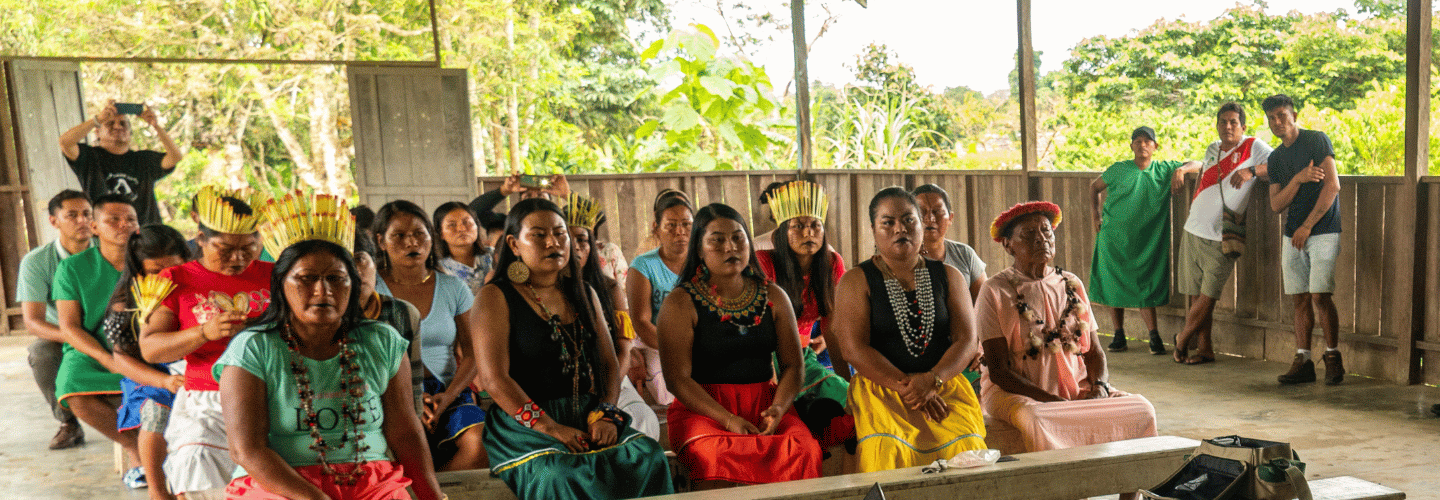
Deep in the Amazon, the Siekopaai people, one of the original Indigenous Peoples of this region, have lived in communion with the land for more than 3,000 years, across Ecuador and Peru, passing down ancestral wisdom through generations of storytellers, healers, and ceramic artists.
Yet for decades, this connection has been tested by forces beyond their control, including land-extraction industries and the 1941 political conflict between the two countries, which drew a border through the heart of the Siekopaai territory, splitting families across an invisible line that would keep them apart for decades. Distance and isolation limited the Siekopaai’s ability to communicate and organize in a rapidly changing world.
Today, a new kind of connection is emerging: one that does not replace tradition but helps protect it. The project “Sianëtsio sikowa’i: Amazon Always Connected” is more than a connectivity initiative. It is a story of people choosing their own digital future on their own terms, guided by the hands and voices of the Indigenous community. Implemented by TechSoup Global, in partnership with Equitable Origin, and supported by the Internet Society Foundation’s BOLT Grant Program, the project deployed community-owned Internet networks across the Siekopaai territory in Ecuador and Peru.
“Before Equitable Origin reached our community through the CEFO Indigena program, communicating with our family in faraway communities was very difficult,” says Liliana Payaguaje of the Keñao Women’s Association. “To meet, we had to embark on three or four-day trips from our side of the Ecuadorian border.” On his side, Sergio Sandoval, a community technician, states that “in the Peruvian Amazon, when we lacked Internet connection, we communicated via radio systems. It was bad: my village was disconnected from the rest of the world. We had no idea what was happening elsewhere.”
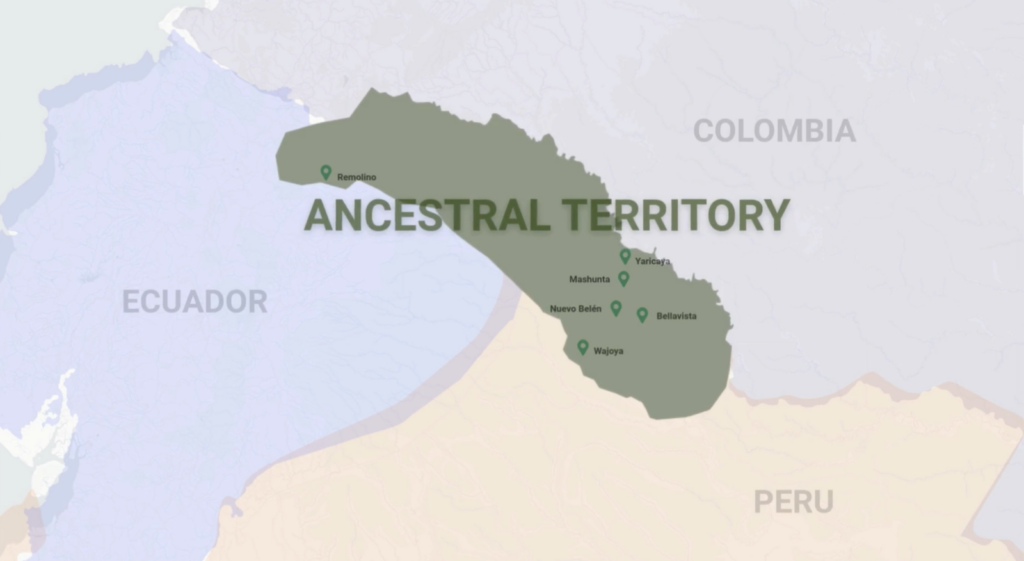
For years, a lack of Internet connectivity has shaped the daily lives of the Siekopaai people. Fewer than 4% of 1,500 communities in the Ecuadorian Amazon and just 2.5% of 2,800 communities in the Peruvian Amazon have access to high-speed Internet, according to a study made by Equitable Origin – CEFO Indigena (Centro de Fortalecimiento de los Derechos Indígenas) in 2021.
In the Siekopaai territories, home to about 2,000 people, digital exclusion reflects generations of displacement, limiting access to healthcare, education, and economic opportunities. Young people migrated in search of opportunity; elders feared the erosion of language and culture; and women faced compounded barriers, including traditional gender roles that restrict mobility and participation, as well as a lack of digital tools in their own languages.
Yet it was women, particularly young leaders and artisans, who began to reimagine what connectivity could mean. Rooted in their roles as knowledge keepers and organizers, they saw the Internet not as a threat but as a tool to strengthen culture, reconnect families, and create opportunity.
Women: The Heart of the Connectivity
A younger generation of women became the vanguard of connectivity. The Siekopaai women led a movement to adopt new technologies and harness their potential to support the virtual reunification of their people and the stewardship of their lands. Together with Keñao Women’s Association, the women’s ceramic artists’ association in the community of Siekoya Remolino in Ecuador, local women technicians learned to manage the Internet and use it to protect the wisdom and principles passed down by their elders.
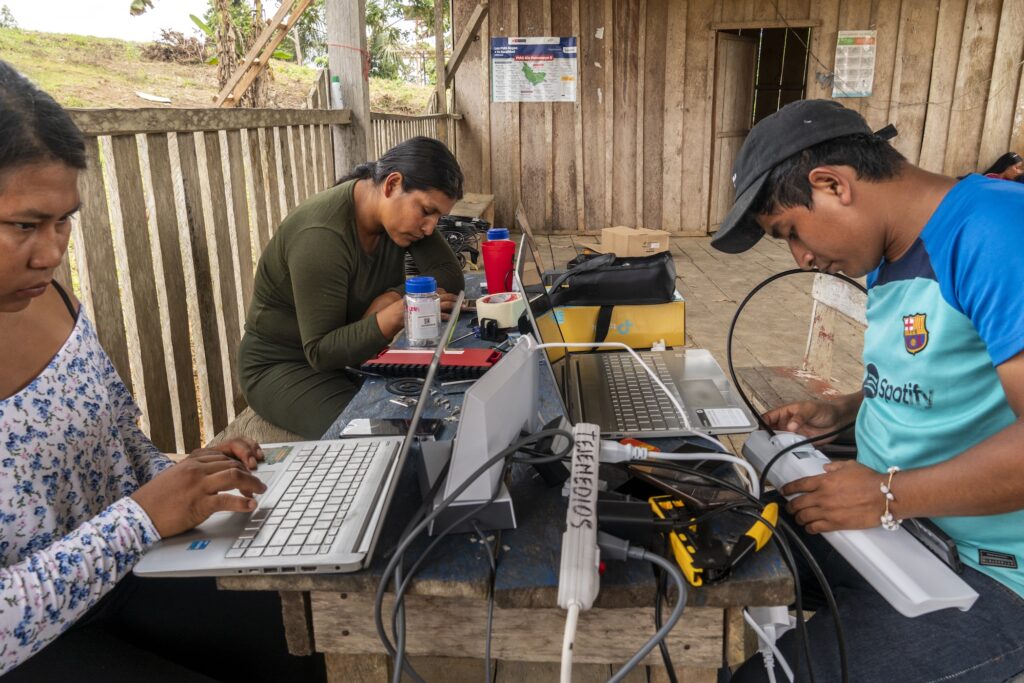
At its heart is a simple yet powerful idea: people come before technology. Rather than delivering the Internet as an external service, the project supported community networks with locally owned and managed infrastructure designed by and for the Siekopaai people. Six communities were connected, and around 360 residents actively use these networks not only to access information but also to strengthen collective life across borders.
A defining feature of this model is women-led governance. Thirteen people were trained as community Internet promoters and network administrators (seven of whom are women). Across four communities, women’s associations now oversee how connectivity is used: setting rules, managing finances, and ensuring digital safety. They are also expanding economic opportunities, using digital tools such as photography and design platforms to create catalogs of traditional ceramics, sharing their artistry with wider markets while preserving ancestral knowledge. Liliana Payaguaje, from the Keñao Women’s Association, says: “Now we can showcase our way of life through our community network. This is our cultural resistance.”
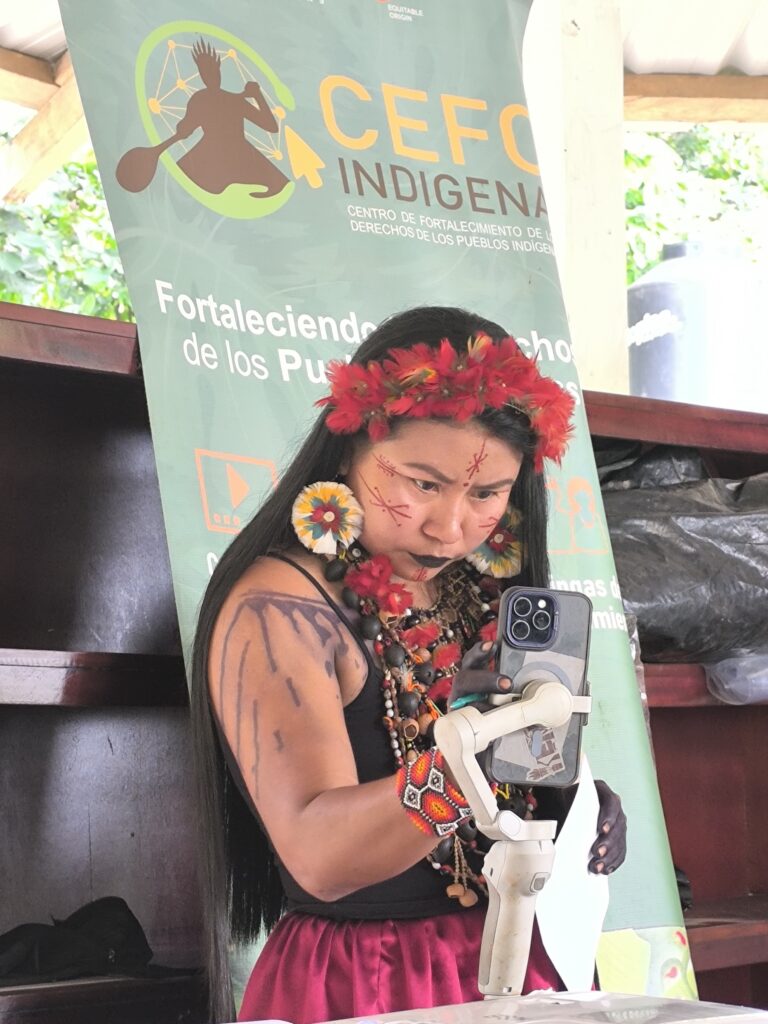
Women’s associations co-organized eight community gatherings throughout the year, using the community network for communication, education, cultural dissemination, and organizational management. Additionally, this presents a significant opportunity for younger generations: “We need our youth to study, so they learn about the reality coming our way from the Western world and the value of the Siekopaai culture. Then they can declare what they want to pursue and demand,” states Yadira Ocoguaje, Keñao founder and Equitable Origin’s Board member.
Community at the Center of Decision-Making
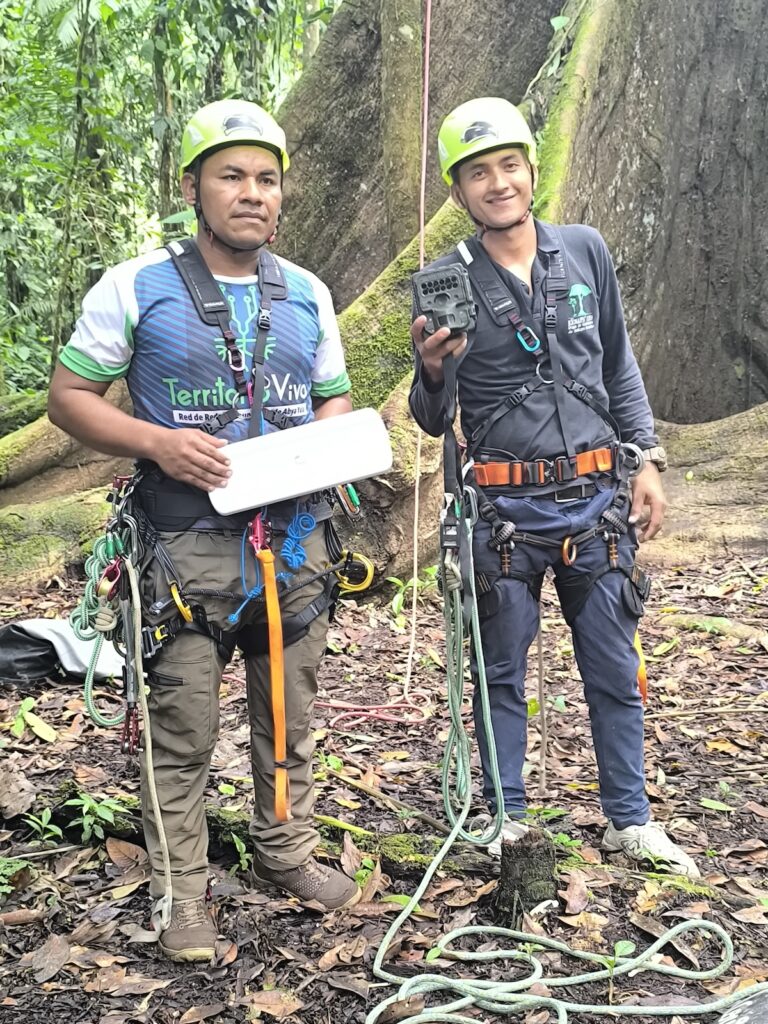
What made this project different was its foundational commitment to community-led decision-making. Equitable Origin’s approach to all of its projects is based on supporting community assemblies to collectively decide whether and how networks would be deployed, governed, and managed. Antennas were mounted in ancient trees by the Kënapu Tiyo, a group of Indigenous specialists who traditionally climb the forest’s tallest trees to gather food. Local Indigenous solar installers powered the off-grid battery systems, and women led the network’s management.
Equitable Origin – CEFO Indigena program director, Joaquín Wray, reflects on the approach: “Over 95% of Indigenous peoples in the Ecuadorian and Peruvian Amazon were offline, and when connectivity arrived, it often brought risks to the cultures of the stewards of the Amazon. Our award-winning model of meaningful connectivity begins with Free, Prior and Informed Consent. We partner with Indigenous women in network governance, giving them the tools to manage the content they consider relevant and safe.” The result is meaningful connectivity that strengthens governance, culture, and livelihoods and integrates connectivity, women’s leadership, and territorial monitoring into a single ecosystem.
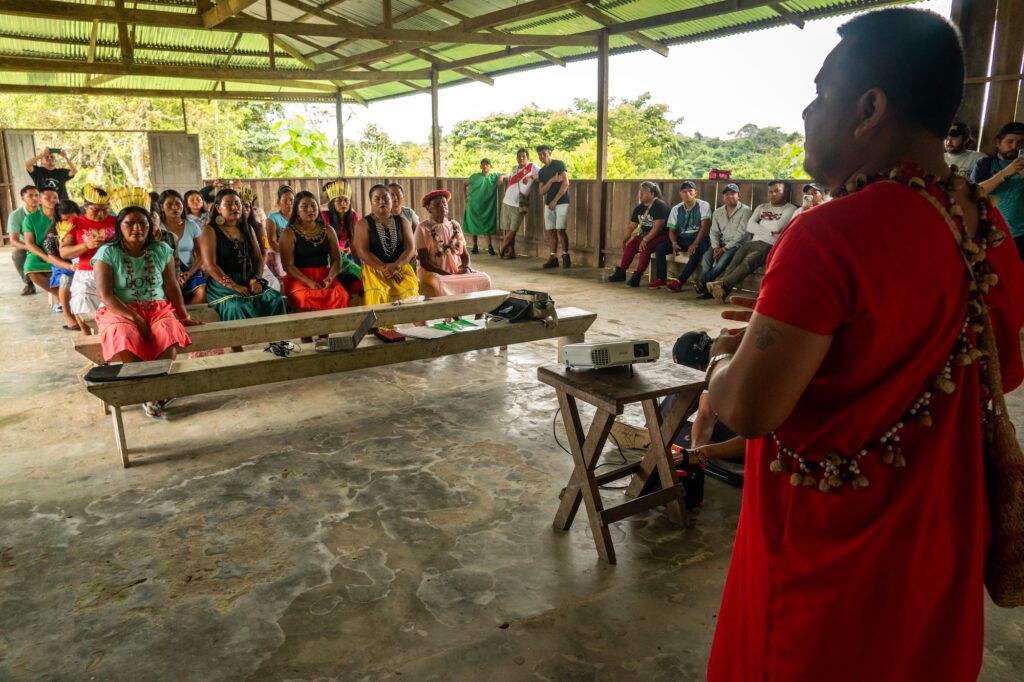
The outcomes exceeded expectations, and connectivity transformed trans-border governance. The Indigenous Organization of the Siekopaai of Peru (OISPE) now uses community networks for regular communication to protect threatened Siekopaai territory. Community scouts and tree climbers use the Internet to monitor and share territorial activities. “Internet Society Foundation’s support was essential to bringing this form of meaningful, safe, and financially sustainable connectivity to the Siekopaai people, supporting their vision of territorial governance, protection of nature, and culture” noted Wray.
This project exemplifies the Internet Society Foundation’s grantmaking focus, aligned with the Internet Society’s 2030 strategy to ensure everyone has access to an affordable, reliable, and safe Internet. Prioritizing community-centered connectivity is one of the most effective ways to reach the hardest-to-reach, including the Internet Society and the Internet Society Foundation’s core target populations, such as Indigenous communities and women.
Chris Burns, Vice President of Philanthropy at the Internet Society Foundation, explains what the project represents: “The Siekopaai project is a powerful demonstration of what meaningful connectivity looks like when communities are truly in the driver’s seat. Seeing Indigenous women lead the governance of their own networks, protecting their culture, connecting their families across borders, and building economic futures on their own terms, is exactly the kind of impact we exist to support.”
The partnership builds on a growing relationship with Equitable Origin, a grantee that in 2023/2024 received a Connecting the Unconnected grant to implement three community networks in the Nangaritza region of the Ecuadorian Amazon. These networks are now operational and managed by local Shuar technicians, serving about 200 users. Equitable Origin CEO, Jason Switzer, describes a broader ambition: “We are grateful for the Internet Society Foundation support, which has powered our effort to connect the Siekopaai people across their traditional territory spanning Ecuador and Peru, at the heart of the Amazon. Our ambitious vision is to scale this model to 15 transnational indigenous peoples by 2035, working with partners who share with the Internet Society Foundation and Equitable Origin the belief in the potential of the Internet to help people.”
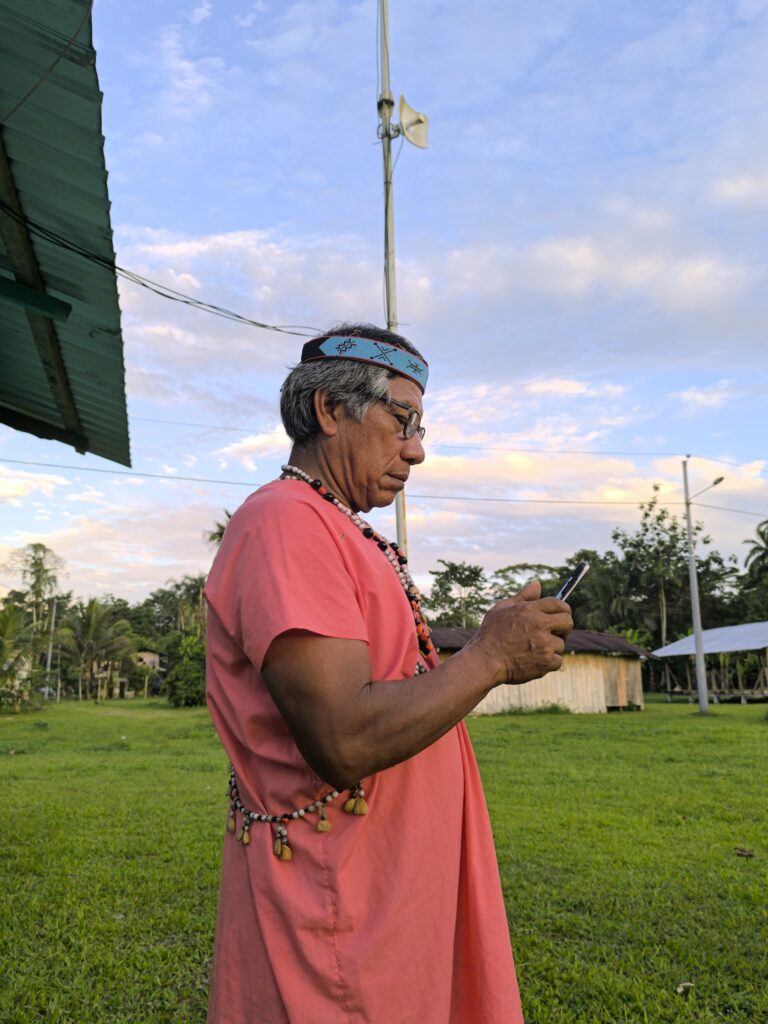
Ultimately, the Siekopaai narrative offers a subtle yet powerful message: the Internet need not threaten culture; rather, it can serve as a conduit, guided by community voices.
Beyond connectivity, the story of “Amazon Always Connected” is already traveling far beyond Amazon and reaching global audiences. The documentary “Si’aniëtsio Siekowa’I – Amazonia SiempreConnectada,” directed by Martín González, has been selected for International Film Festivals, showcasing the story of the connectivity project in the Siekopaai territory.
Learn more about digital inclusion and indigenous connectivity in these Internet Society articles:
– Digital Inclusion and Indigenous Connectivity
– What is Indigenous Connectivity? And Why Should We All Care?
Note: The BOLT grant program – Building Opportunities/Leveraging Technologies – is no longer accepting applications. We invite you to explore the new Community-Centered Connectivity grant program for upcoming funding opportunities.