

Internet for Good: Introducing the Internet Society Foundation
How can the Internet’s role as a force for good be magnified throughout the world? The newly-launched Internet Society Foundation has a plan. We fund initiatives that use the Internet to make a difference in communities and transform lives for the better in areas including education, health care and economic growth – and we support projects that ensure the Internet remains a catalyst for the open, inclusive, and dynamic world in which we live.

TunapandaNET: A Scalable Solution to Address Global Challenges
In one of the largest urban slums in Africa, people live in abject poverty. The nearly 200,000 residents of Kibera, located in Nairobi, Kenya, have an average income of a little over $1 a day, while many people lack access to basic amenities such as adequate medical care and clean piped water. In 2016 the Tunapanda Institute decided to address some of these issues.

Training Journalists on Internet Governance in Tanzania
Journalists are often at the frontline of emerging digital issues – whether they’re protecting a free press or the privacy of their sources – and they can have a powerful voice in shaping the Internet’s future.

In Kenya, Helping Kids Use the Internet Responsibly
A recent survey on how children use the Internet, included some surprises. “Safe Online, Safe On Land” addresses some of these issues.

Access to Quality Education in Paraguay
Colegio Técnico Nacional (CTN), a secondary school located in Asunción, is one of the top schools in Paraguay offering the technical baccalaureate.
Want to Make a Difference in Your Community? Apply for a Beyond the Net Medium or Large Grant
Applications are open for the 2019 Beyond the Net Medium and Large Grants, supporting Internet Society Chapters and Special Interest Groups (SIGs) in making a difference in their communities. With funding of up to $30,000, the programme helps bring community-led projects to life, from developing digital skills and strengthening trust in the Internet to expanding connectivity in underserved and Indigenous communities.
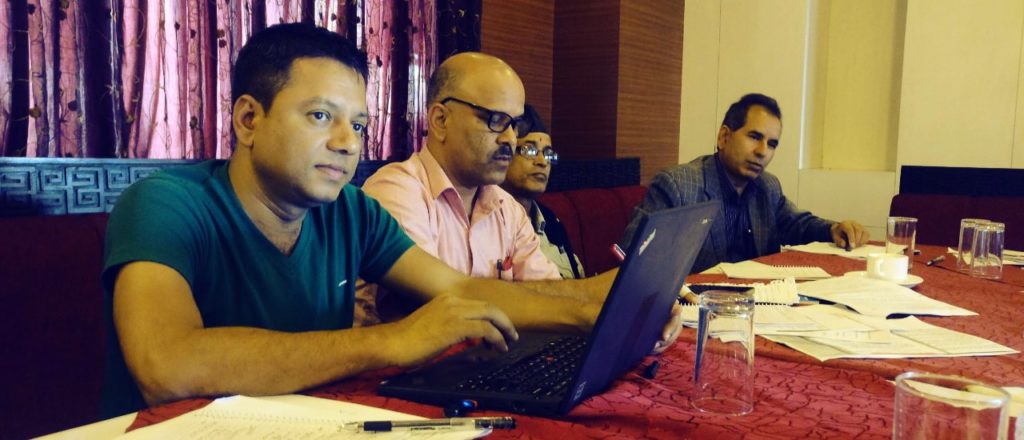
Contributing to a Better Policy Environment in Nepal
Recently, the Federal Parliament of Nepal introduced two pieces of legislation: the Individual Privacy bill, which deals with online privacy and data protection, and the Information Technology bill, which aims to replace the existing Electronic Transaction Act and has a broad scope.

Testing Drones for Post-Disaster Operations in the Philippines
Unmanned Aerial Vehicles (UAVs) – more commonly known as drones – can be a powerful tool to speed up the post-disaster assessment process.

The Zaria Community Network and Culture Hub
When providing reliable broadband networks in rural areas is not sustainable for commercial operators, the Community Network model can provide an individual-centered Internet, deployed and operated by citizens to meet their own communication needs.

Kazakh Women in Cybersecurity
How can we increase the number of women working in cybersecurity? According to a 2013 report, women represented just 11% of the global cybersecurity workforce. That number may be rising, but women are still woefully underrepresented.
The Internet Society Kazakhstan Almaty Chapter has a solution.
- « Previous
- 1
- 2
- 3
- 4
- Next »